
Local news has been on a two-decade losing streak, but a few scrappy newsrooms just figured out how to stop the bleeding. Some small newsrooms are actually thriving, and educators are turning “quality journalism” into something you can practice, not just praise from afar. Together they sketch a path where local reporting and news literacy team up to focus less on outrage and more on solutions that measurably help communities.
Watch this Trust Me documentary clip to see how freedom of expression can erode when journalists are sidelined (or worse!) - and why reporters are essential to keeping that right alive.
📊 Getting Better Poll
Share this post and invite others to share what informed their answer or shaped their perspective.
▶️ If you want a wider lens on how fear and sensational stories shape public trust, check out our award-winning documentary “Trust Me”.
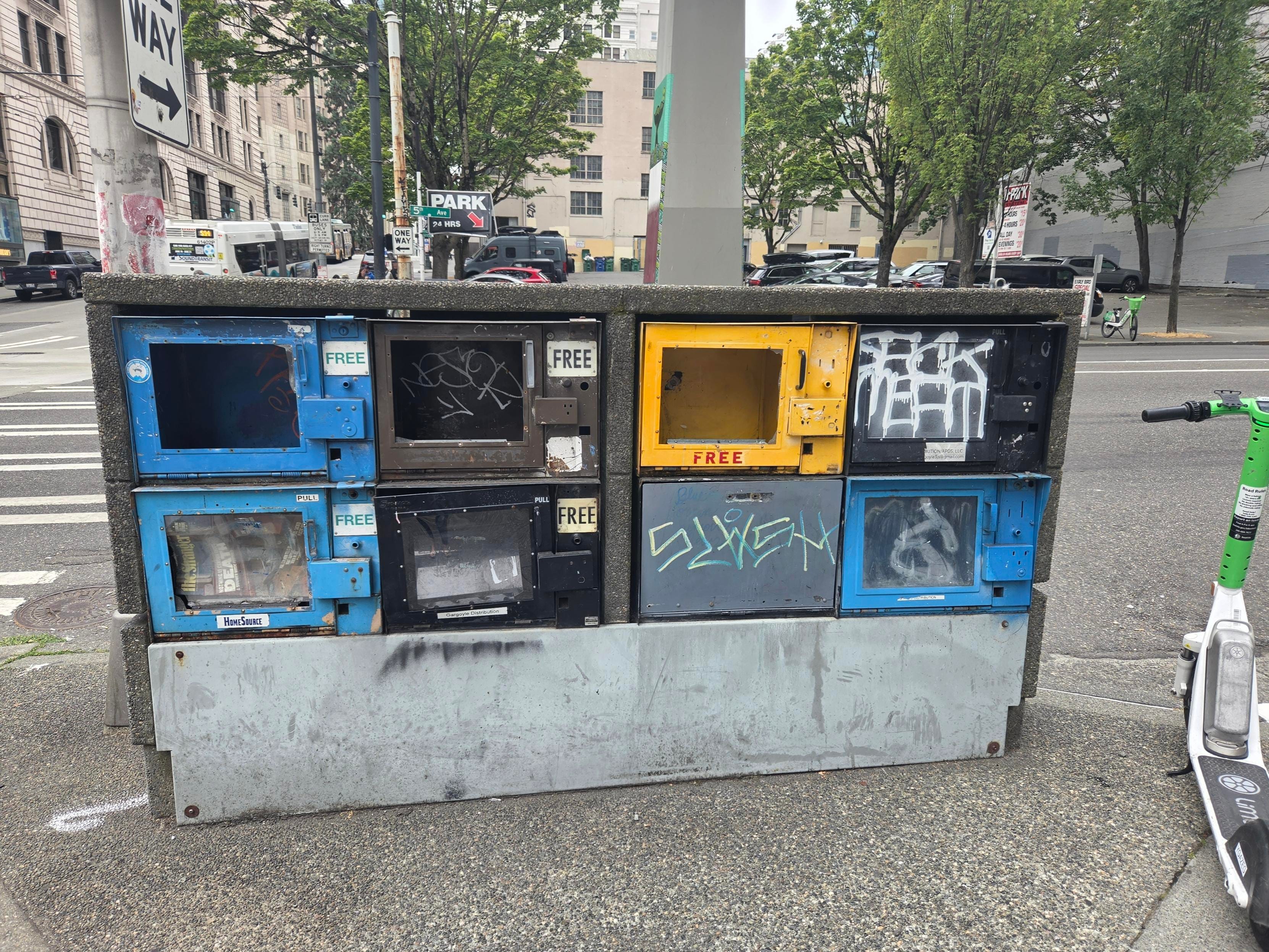
📰 When a Print Weekly Becomes a Local Lifeline
The New York Times profile of The Chronicle, a free weekly in Glens Falls, New York, reads almost like a glitch in the matrix: in a world of collapsing print, this small independent paper is still finding readers, powered by a founder who literally does the delivery rounds himself. The evidence is simple but stubborn, a paper that stays free, stays local, and stays physically present on doorsteps while bigger brands retreat behind paywalls and cut staff.
Zoom out and the State of Local News data is brutally clear: more than 3,500 newspapers have vanished since 2005, and about 50 million Americans now live in counties with limited or no local news. The Chronicle doesn’t “solve” that crisis, but it shows how direct relationships, community service journalism, and owner‑operators who adapt instead of giving up can bend the trend line, even if only for one town at a time.
The Better Take:
When you see stories about a tiny outlet “miraculously” thriving, treat them as case studies, not cute exceptions. Look for the mechanics: How close are the journalists to their readers, what problem are they clearly helping people navigate, and where do you see elements of service or solutions journalism rather than just disaster‑watching. Those details are the parts you can apply to other communities, not just the feel‑good headline.

🌱 Solutions Journalism in the Middle of News Deserts
Heartland Forward’s look at local journalism is blunt about the damage: the U.S. has lost more than one‑third of its newspapers since 2005, and news deserts now cover 212 to 213 counties, leaving tens of millions with little or no access to local reporting. But buried in the same data is a counter‑trend, more than 300 local news startups launched in the past five years, many built around “Bright Spots” models that mix reader support, foundations, and deep community partnerships.
Deep South Today is one of those Bright Spots, using solutions‑focused reporting on economic development, education, healthcare, and civic engagement, then syndicating that work across commercial outlets to reach far beyond its own audience. The problems are still huge, and rural areas remain under‑served, but the evidence says that when newsrooms explicitly report on responses to systemic issues, rather than just the failures, readers show up and impact travels farther.
The Better Take:
When you read about “news deserts,” look just as closely for the parts about startups, networks, or collaborations that are experimenting with community‑funded, solutions‑driven coverage. Those are early prototypes for something better, and their success or struggle is a much more useful signal than the latest think‑piece declaring local news either dead or magically saved. Paying attention to what actually works makes it easier to support outlets that are quietly rebuilding the information plumbing underneath democracy.

📚 Turning Journalism Standards into Everyday Tools
The News Literacy Project’s “seven standards of quality journalism” may sound obvious at first pass, but they’re basically a cheat sheet for knowing when a story deserves your attention. Multiple credible sources, real documentation, verification, avoidance of bias, balance, context, and fairness are framed not as abstract ideals, but as habits students can practice as they build their own reports.
The project is upfront that these standards are partly obligatory and partly aspirational, and that applying them is messy, judgment‑heavy work that shifts with new tools like social media and livestreaming. That honesty matters, because it pushes readers away from “is this true or fake” toward “is this reported in a way that’s fair, transparent, and grounded enough that I can act on it without getting played.”
When a story cites anonymous sources, cherry‑picked quotes, or vibes instead of documentation, that’s your cue to slow down, not to panic. Ask the same questions the standards ask: Who is in a position to really know this, what evidence is on the table, and how clearly does the outlet separate facts from interpretation. Over time, those questions turn doomscrolling into a quick filter where the most standards‑driven reporting rises to the top of your feed.
📚 Getting Better Recommendations
Checkology® Resources: For anyone who wants to get sharper at spotting the difference between a real trend and a headline stretching a single data point, the News Literacy Project’s Checkology® Resources are worth bookmarking. It’s built specifically to help readers evaluate statistics, projections, and survey claims.
Anyone in Nebraska should check out the Flatwater Free Press. Stellar journalism.