
A fresh year doesn’t just bring resolutions, it brings perspective. Here’s what’s inside:
📊 Child mortality proves the world is awful, better—and still improving
🤝 Why connection‑first goals may matter more than productivity
🌍 The good news from 2025 that didn’t always make headlines
📉 Homicides hit record declines across major U.S. cities
📱 New warning labels aim to make social media safer and clearer
🧠 Research shows earlier phones can mean poorer sleep and health
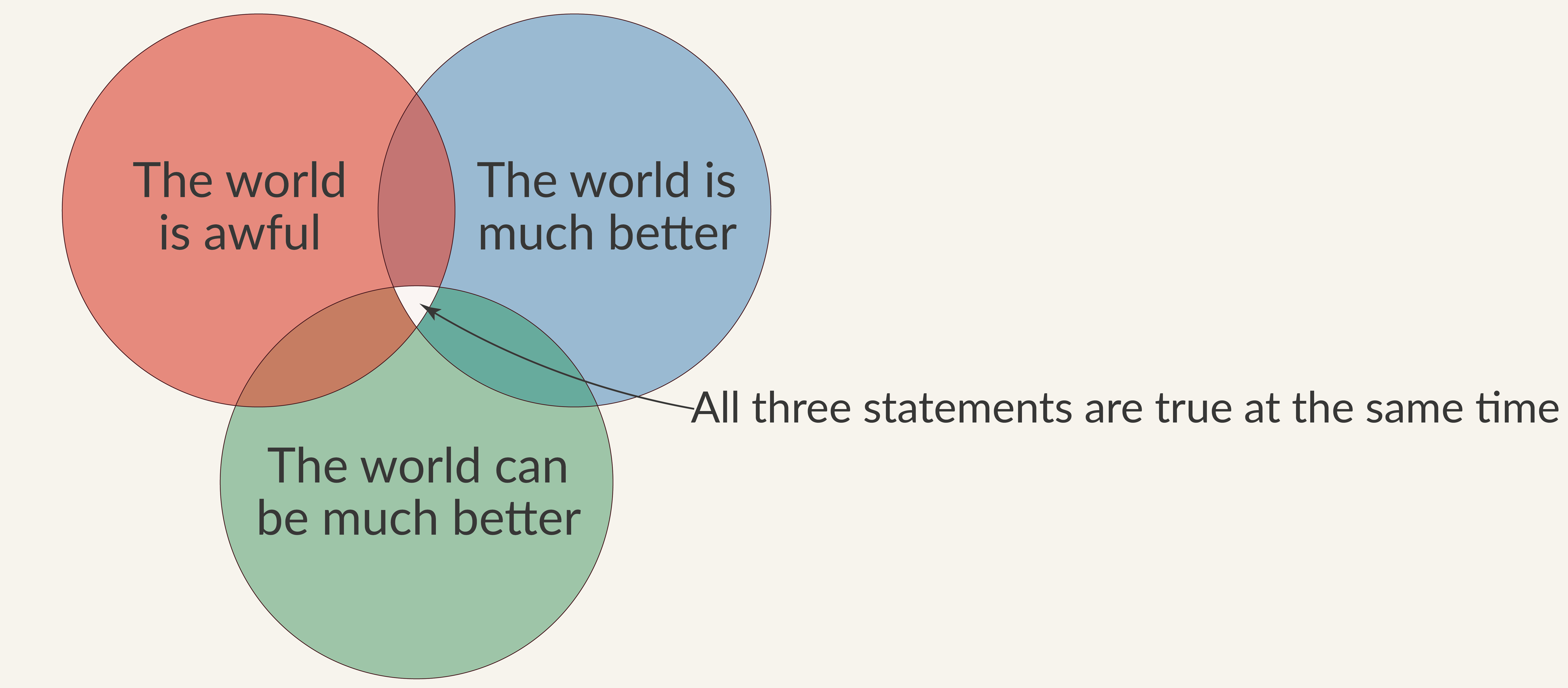
The World Is Awful, Better - and Can Be Better Still
It’s possible for three things to be true at once: The world remains full of hardship, it’s improved immensely, and there’s room to make it better. That’s the message of a recent post highlighting global child mortality data: 15,000 children die every day, but that number used to be 10 times higher. In centuries past, half of all children died before reaching age 15. Today, that number is just 4.2% globally — and 0.5% in the EU.
This kind of progress often gets lost in grim headlines. Acknowledging the pain of the present while recognizing historic gains is key to sustaining hope and motivation.
Reconnecting in the New Year
As a new year begins, many of us think about goals — but what if the most meaningful ones were about connection rather than productivity? Experts suggest resolutions that help us strengthen relationships, deepen community ties, and focus on shared experiences. Simple intentions like sharing meals, listening deeply, volunteering, exploring local history, or even writing letters not only strengthen relationships and deepen community ties, they also serve as great antidotes to “doomscrolling” and disconnection that lasts beyond January.
Connection‑centered resolutions encourage presence, empathy, and kindness, reminding us that personal and communal well‑being are inseparable.
What Went Right in 2025: A Global Roundup of Progress
Amid the headlines and upheaval, 2025 saw a surprising amount of positive, measurable progress. From advances in public health to breakthroughs in renewable energy adoption and global poverty reduction trends, many of the year’s most important achievements didn’t make the front page — but they impacted millions of lives.
Some standout highlights:
Malaria vaccines began protecting children across 12 African countries
A UN‑backed treaty to protect 30% of international waters by 2030 was ratified by over 90 nations
Child labor rates declined for the first time in years, aided by education and legal reforms
Global literacy continued its steady upward climb
Renewable energy capacity expanded at record pace, marking a turning point in climate action
In a world saturated with crisis coverage, these gains show that progress is real — slow, uneven, and fragile, but alive and evidence‑based.
U.S. Homicide Rates See Record Decline in 2025
New data shows the U.S. is poised to end 2025 with the largest one‑year drop in homicides ever recorded, reversing years of pandemic‑era violence when killings surged nearly 30% in 2020.
Key stats from the report:
Homicides fell about 20% nationwide in 2025, surpassing the 13% decline in 2023 and 15% in 2024
Major cities saw historic drops: Chicago down 30%, New York down 21%, and Detroit, Philadelphia, and Baltimore on track for their lowest murder counts in decades
Violent crime overall declined 9%, while property crime dropped 12%
Experts say the reasons behind the decline are complex, likely involving a mix of community efforts, policing strategies, and a return to pre-pandemic social rhythms. Still, the numbers challenge widespread public perception that crime is worsening and could reshape how safety is discussed heading into the next election year.
New York Requires Warning Labels on Social Media
New York has become the first U.S. state to mandate warning labels on social media platforms. Companies must alert users—especially those under 18—to risks of addiction, misinformation, and algorithmic amplification when engaging with features like infinite scroll and autoplay.
These labels are intended to make hidden platform dynamics more transparent and encourage healthier, more thoughtful engagement, echoing the public‑health approach of tobacco warning labels.
Too Soon for Smartphones? New Data Says Yes
New large-scale research is offering clearer insight into how early smartphone access may affect kids’ health. A study of over 10,500 U.S. children found that those who got phones at 12 — just one year earlier than age 13 — had a 60% higher risk of poor sleep and a 40% higher risk of obesity.
Other findings echo a growing pattern: early and excessive screen use is linked to lower cognitive performance, increased anxiety, reduced memory, and rising rates of teen depression. Sleep quality drops when phones are used late into the night, and many teens report feeling emotionally worn down by constant digital engagement.
As more rigorous data replaces anecdotal claims, researchers and parents alike are rethinking what age-appropriate digital access really looks like.