
Media literacy is becoming one of the most practical back-to-school skills as AI meddles with political ads, viral “animal tricks,” and even kid-focused media.
Here’s a quick tour through campaign spots, a suspicious coyote, and a surprisingly effective media literacy song, plus some grounded ways to help kids stay curious and skeptical without turning every scroll into a panic attack.
📊 Getting Better Poll
Share this post and invite others to share what informed their answer or shaped their perspective.
▶️ If you want a wider lens on how fear and sensational stories shape public trust, check out our award-winning documentary “Trust Me”.

🗳️ Political Ads Just Got a Pop Quiz Nobody Studied For
Media literacy consultant Frank Baker built a 50-minute lesson plan for teachers walking into a school year where AI generated political ads are no longer a hypothetical. The lesson leans on real detection habits: check the source, look for required AI labels, and run suspicious clips through tools like TinEye or Google’s reverse image search before believing anything. Evidence backs the urgency. An EdWeek Research Center survey from early 2026 found 61% of elementary teachers say students struggle “a lot” to tell AI content from real content, a number that drops but doesn’t disappear in middle school, 44%, and high school, 38%.
Here’s where perception and reality split. Parents often assume this is a “kids these days” problem, but Baker’s framework treats it as a skill anyone can learn, not an innate generational gap, since even trained adults get fooled by convincing fakes. The bigger trend is that media literacy still isn’t a required course in most states, even though at least half of U.S. states have passed some media literacy legislation, 11 of them since January 2024. Importantly, there’s still no single agreed-upon curriculum, and experts admit AI is evolving faster than school policy can track.
The Better Take:
Treat any political ad you can't independently verify as entertainment, not evidence, until a labeled source confirms it. The genuinely useful skill here isn't spotting glitchy AI hands, since generators keep improving, it's building the reflex to check who paid for the ad and where it's labeled before reacting to it. That reflex protects you in every election cycle to come, not just this one.
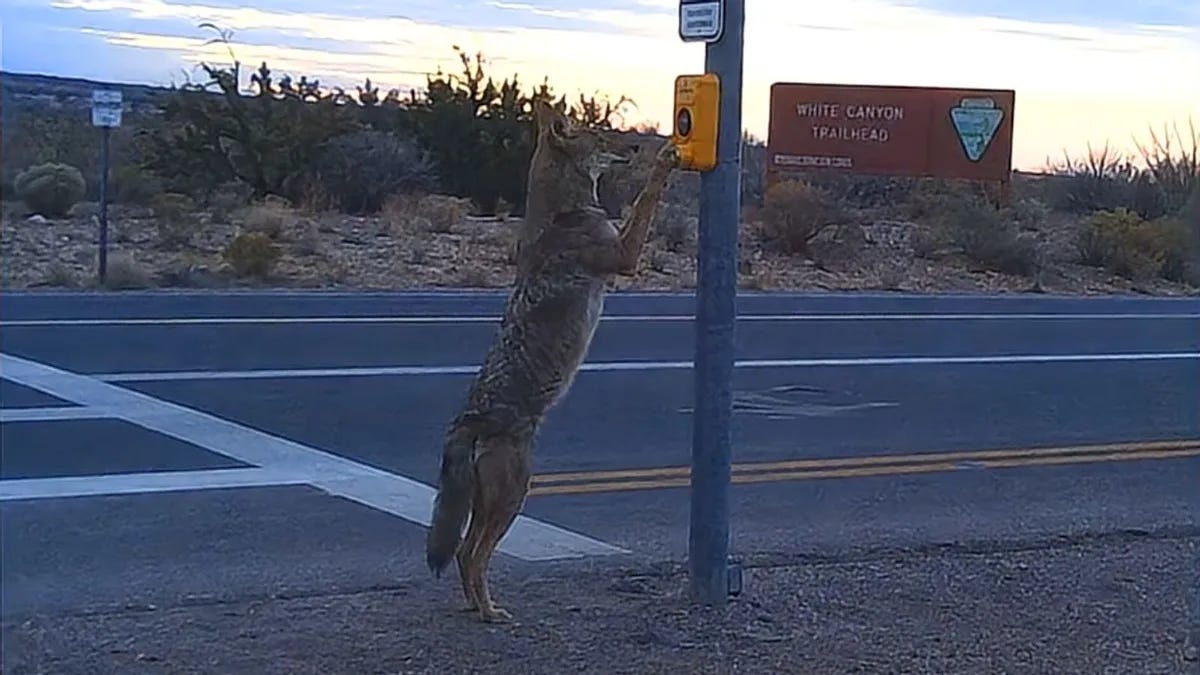
🦊 That Crosswalk Coyote Never Existed, and Neither Should Your Trust in It
A viral video claimed a wildlife camera near Payson, Arizona caught the same coyote pressing a crosswalk button 147 times over six months, waiting patiently for its walk signal like a very disciplined pedestrian. Snopes traced the image and story back to an AI content channel called Warm Heart Chronicles, which also produces fabricated tales about a cat cozying up to a judge’s gavel and an emu shutting down a Burger King drive-thru. The tell wasn’t the coyote’s suspiciously perfect posture, it was basic geography: the “White Canyon Trailhead” mentioned in the story doesn’t exist anywhere near Payson.
This is where the gap between charm and credibility shows up clearly. The story felt true because it was oddly specific and delightful, not because anyone verified it. And that’s exactly the emotional hook these AI content farms are optimized for. It fits a wider pattern fact checkers are seeing in 2026: AI generated “feel good animal” content is spreading faster than verification can catch it, precisely because it’s low stakes enough that people share first and question later. What’s still unresolved is scale. Nobody has a reliable count of how many of these channels exist or how fast new ones spin up.
The Better Take:
A quick Google Maps search settled this one in minutes, proof that verifying a charming story takes less effort than most people assume. The lesson scales past coyotes: if a story hinges on one suspiciously specific detail, like a named trailhead or an exact number of repeat sightings, that detail is often the easiest thread to pull and unravel.
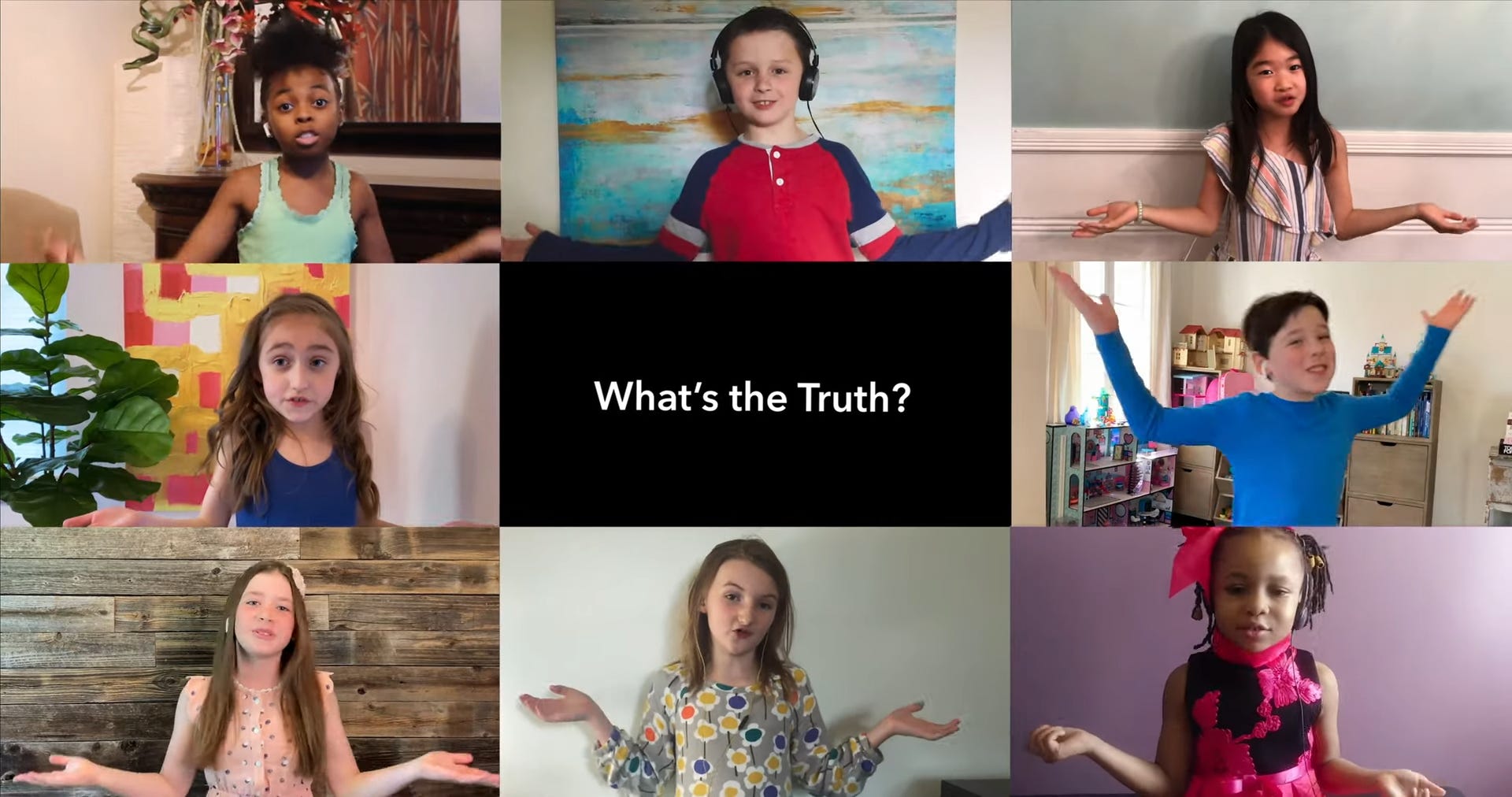
🎵 Kids Singing Their Way Into Media Literacy
The “What’s the Truth” music video from the Trust Me documentary project uses a simple chorus and kid recorded vocals to sneak in core questions about where information comes from and how to test it. The classroom guide connects the song to specific activities for grades 4-6 and up, asking students to compare sources, unpack manipulation tactics, and link the lyrics to real news examples.
This approach lines up with countries like Finland, where media literacy and now AI literacy are baked into the curriculum from early years, not reserved for a single “internet safety” unit in middle school. Even in 2026, implementation is uneven, and many schools still lack time, training, or tech access, which is why reusable tools like short songs and case studies are becoming popular shortcuts.
The Better Take:
The benefit of pairing media literacy with music and stories is that it turns abstract advice like “be critical” into concrete, memorable routines kids can actually recall in the moment. If students can hum the chorus and connect it to checking context, sources, and motives, they carry those skills from the classroom into group chats and feeds without needing a teacher over their shoulder.
📚 Getting Better Recommendations
News Literacy Project’s Back-to-School Starter Pack: Students navigate an endless stream of information and misinformation online, and AI has only muddied the waters further. With our free, standards-aligned lessons, activities, infographics and professional learning you can help students recognize different types of information, identify misinformation, understand AI and more.